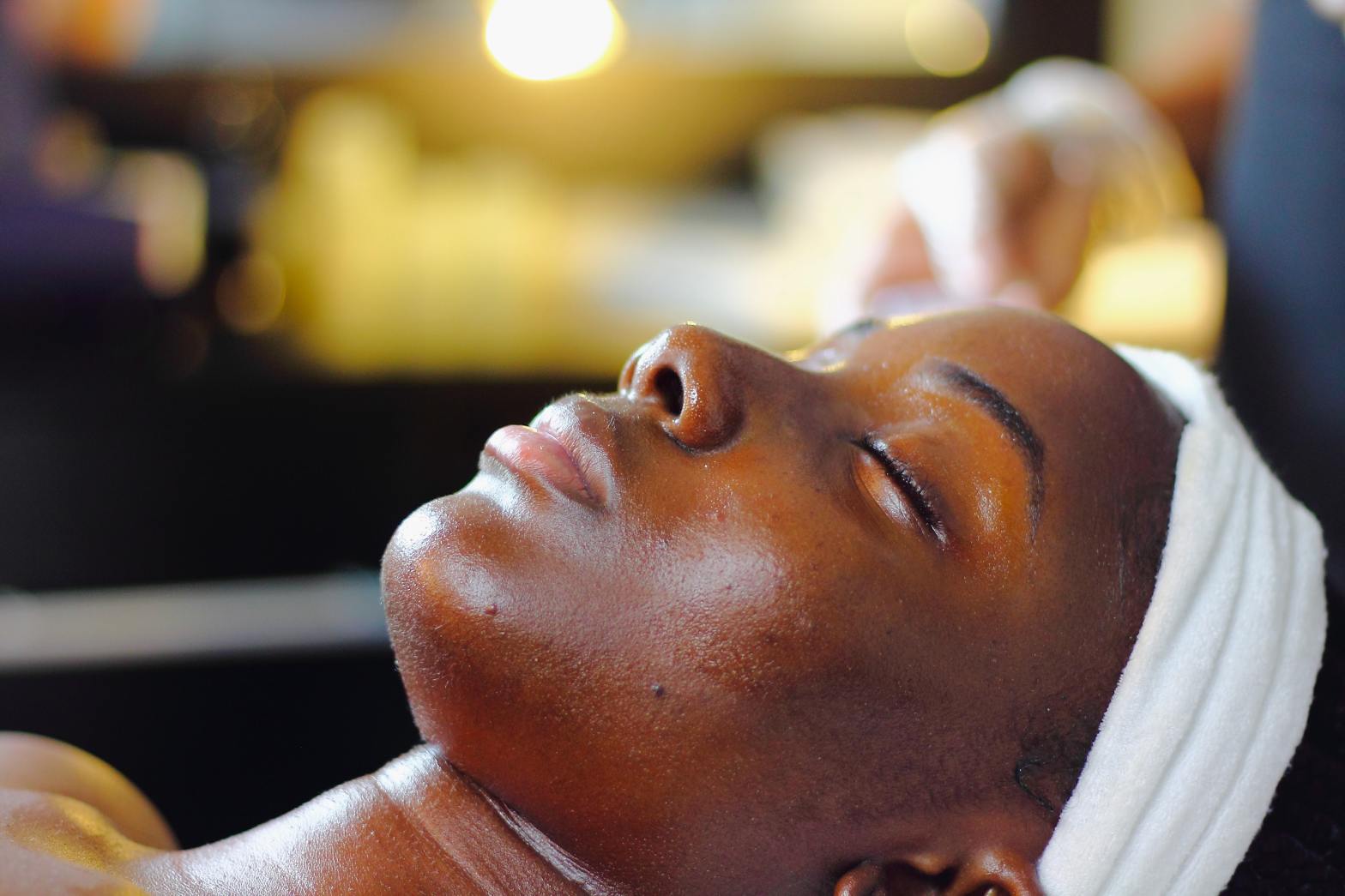
Photorejuvenation is a quick, non-invasive treatment that employs high-intensity pulses of broadband light to effectively treat a diverse range of dermatological ailments.
There are two major benefits to choosing photofacials over more invasive procedures like chemical peels.
First, it can be applied to any part of the body, not just the face. Second, it achieves similar results with zero downtime and no pain. You can walk out of the treatment, apply your makeup, and go back to the office, where everyone will assume you were at the dentist.
There are two types of broadband light used in photorejuvenation procedures—light-emitting diode (LED) and intense-pulsed light (IPL). Both penetrate deep within the epidermis to stimulate cells and encourage the development of collagen and elastin.
LED Photofacials
LED photofacials use different colors and wavelengths to address the specific issue being targeted. Blue light kills bacteria and helps treat acne; red light stimulates collagen production to fill in fine lines and wrinkles.
LED treatments require no preparations before the procedure and there is absolutely no discomfort involved.
IPL Photofacials
While IPL facials are still non-invasive treatments, there is a small physical sensation—similar to the snapping of a rubber band.
Additionally, for IPL photorejuvenation there are a few things you need to do prior to the procedure. Avoid exposure to the sun for at least one month before your photofacial. Don’t drink alcohol or take ibuprofen or aspirin in the week leading up to your appointment.
And as always, follow any additional instructions given to you by your health care providers.
Is Photorejuvenation Right For You?
Photorejuvenation can be used to treat a vast array of cosmetic and dermatological issues anywhere on the body.
- Age Spots
- Broken Capillaries
- Brown Spots
- Elastosis
- Enlarged Pores
- Excessive Flushing
- Fine Lines
- Freckles
- Hyperpigmentation
- Inflammation
- Melasma
- Pigmented Vascular Lesions
- Redness
- Rosacea
- Scars
- Skin Texture Issues
- Spider Veins
- Stretch Marks
- Sun Damage
- Uneven Skin Tone
- Wrinkles
What to Expect From Your First Photofacial
Show up to your appointment with a naked, fresh face—skip the makeup and skincare after your morning shower.
Immediately following the procedure, you may experience some slight swelling or redness which should dissipate within hours or days.
The average client receives three to five treatments—all spaced a month apart. Patients begin seeing results in as little as a week following each session, but the skin will continue to improve in the months after the final treatment.
Are you ready to book your first photorejuvenation session today?
 @DatingtrApps